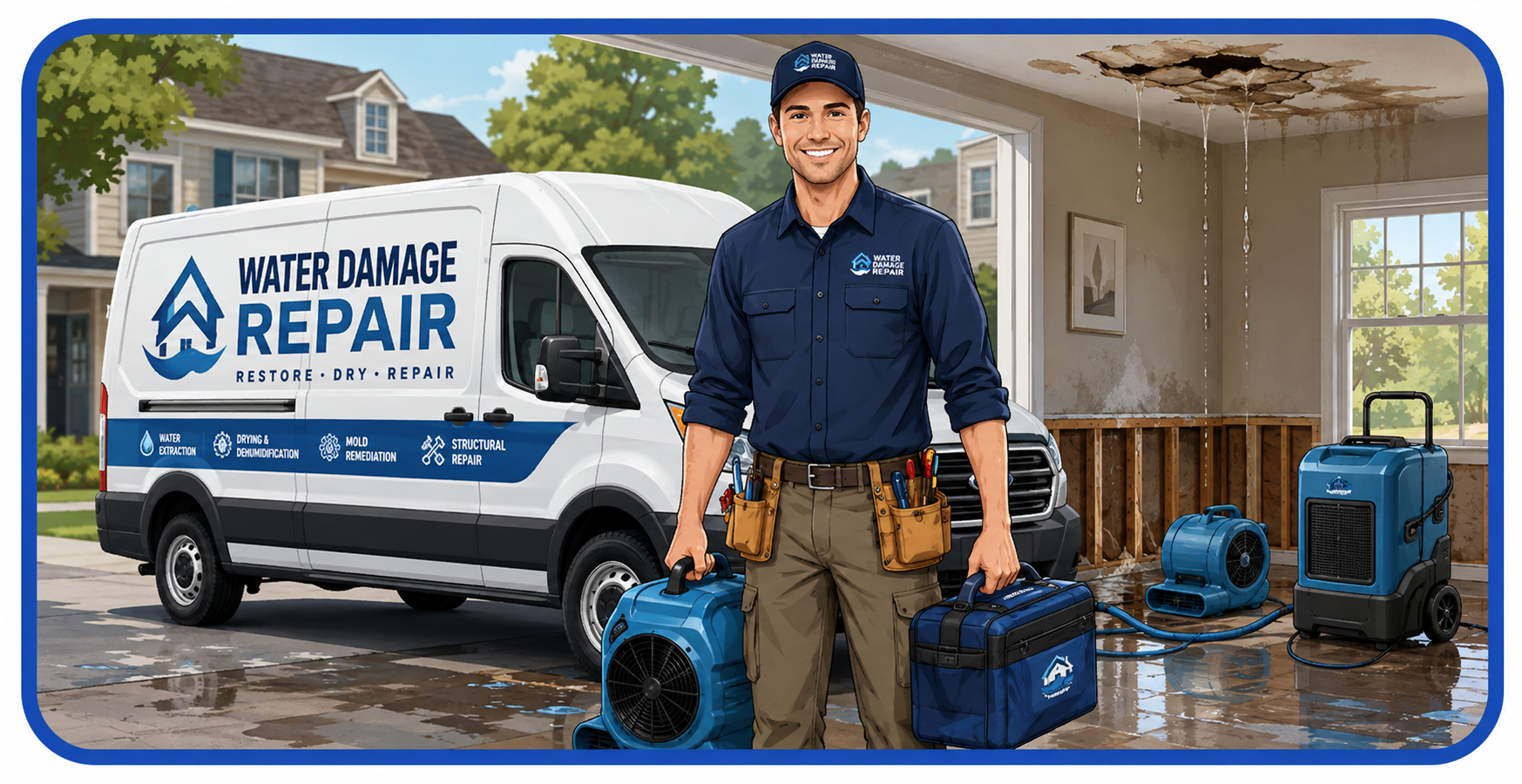
From a slow leak behind the drywall to a full basement flood, Cornwallville property owners call Aqua Guard Water Damage because we show up with the right gear the first time — no guesswork, no upsells at the door.
Call +1-844-578-1604 Now
Aqua Guard Water Damage built its Cornwallville operation around one standard: arrive fast, document everything with moisture readings and thermal imaging, and communicate the drying plan in plain language before we touch a single wall.
We answer our own phones around the clock in Cornwallville, which means the person who books your appointment already knows our schedule, our crew availability, and how fast we can realistically get a truck to your address.
We also carry direct experience working alongside insurance adjusters, so the documentation we generate on day one is already formatted the way most carriers expect to see it.

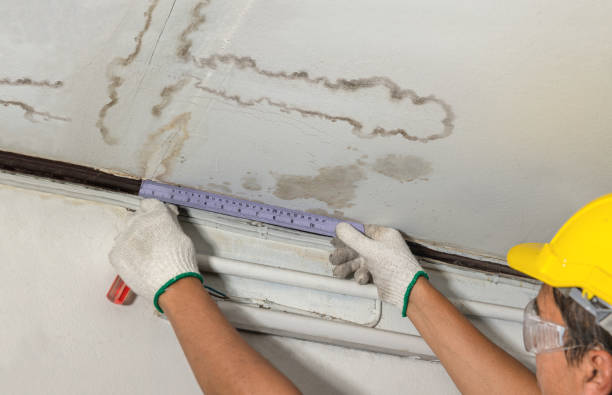
Yellow-brown rings on your ceiling or walls almost always mean water has been sitting behind the surface longer than you think, and the drywall paper backing is likely already feeding mold growth. Waiting to see if the stain spreads only gives moisture more time to travel further into the structure.
Musty odors that seem to follow you from room to room often mean the HVAC system is circulating spores from a hidden wet area, which spreads the problem rather than solving it.
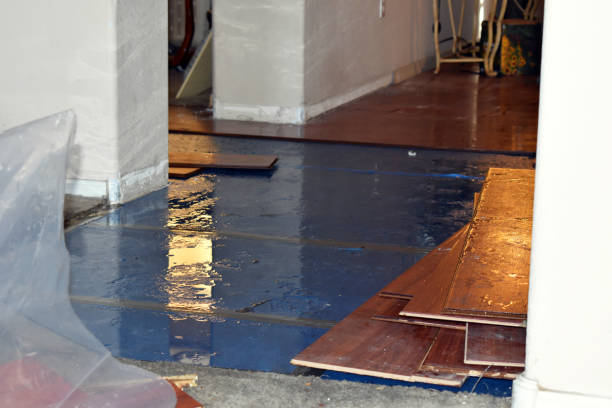
Carpet that stays damp or squishy days after you last noticed water is holding moisture against the subfloor, which is exactly the condition that lets mold take hold underneath.
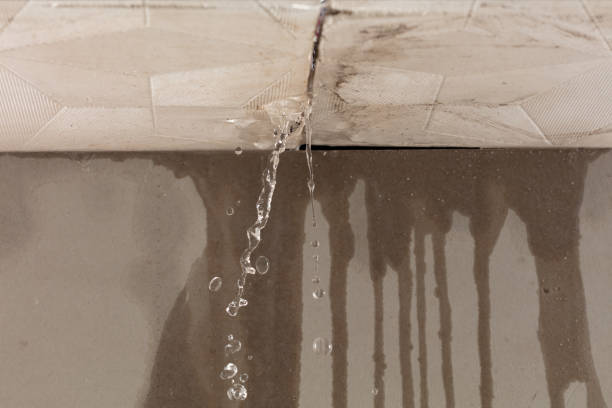
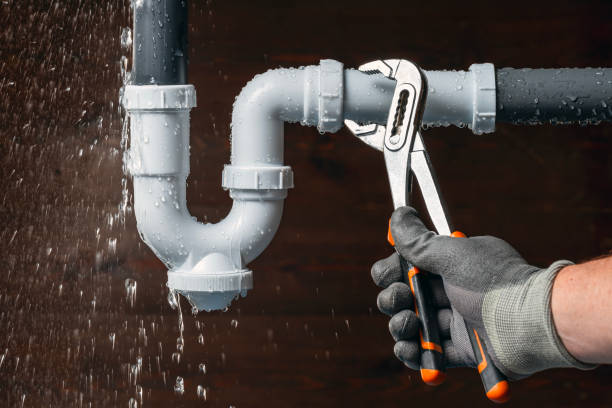
An unexplained jump in your water bill is frequently the first sign of a slab leak or a failing supply line long before any visible water appears. Catching it at this stage is far cheaper than waiting for a visible flood.
Wallpaper that lifts at the seams after being fine for years is often a sign that humidity or a slow leak has changed the moisture level inside that wall.
Dark spotting in grout lines or around window frames is often the first visible sign of a moisture problem that's been developing for weeks.
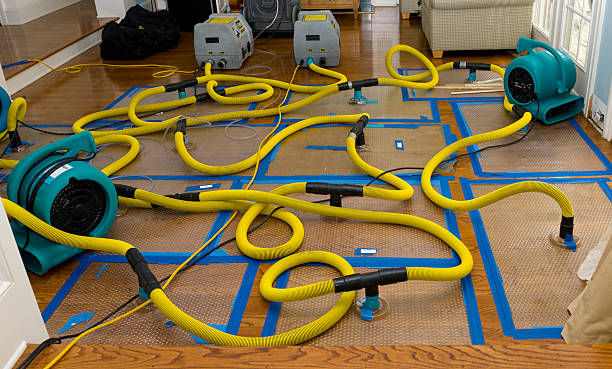
We treat Water Damage Repair as one continuous job rather than a series of handoffs — the crew that extracts the water is accountable for the drying results, and the drying results determine what reconstruction is actually needed.
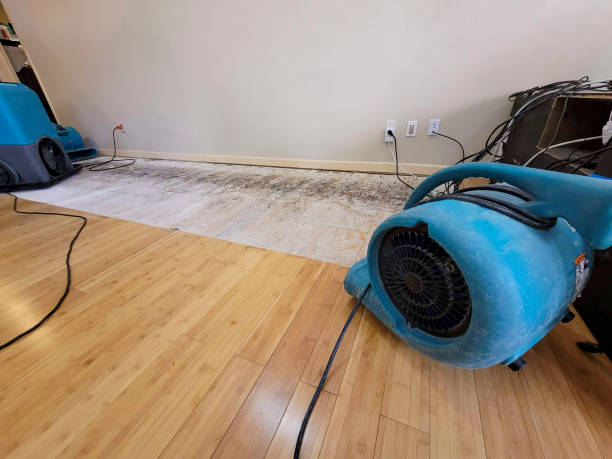
We prioritize extraction speed above everything else in the first hour, because every additional hour standing water sits raises the odds of secondary damage to subfloors and framing.
Drying logs track humidity, surface moisture, and airflow at every checkpoint, so you get documented proof the structure is dry before we close out the job — useful for your insurance claim too.
Blackwater jobs get treated with extra caution, since porous materials that touched contaminated water almost always need to be removed rather than dried in place.
Once structural drying is underway, we apply antimicrobial treatments to studs, subfloor, and other porous surfaces to stop mold colonies before they establish, especially in areas that stayed wet more than 48 hours.
The same team that documented the damage and dried the structure hands off directly to reconstruction, which keeps the whole timeline shorter and the paperwork simpler.
Furniture, documents, and electronics affected by water intrusion get assessed on-site, with salvageable items cleaned and stored while unsalvageable items are documented for your claim.


A real person answers, gathers the details of your water loss, and routes the closest available crew immediately.
We document the loss with photos and moisture readings before touching anything, which also protects your insurance claim.
Extraction and drying run as one continuous process rather than two separate visits, which keeps the timeline tighter.
Once moisture readings confirm the structure is dry, we hand you documentation and move into any needed reconstruction.
We operate under proper licensing and insurance in every market we serve, with documentation available on request.
Trucks are staged regionally so a crew can typically reach you well before a national chain's call center even finishes your intake form.
We'd rather explain the cost clearly upfront than have that conversation after the job is already underway.
We stand behind every job with a documented re-inspection before we consider the work complete.
Every job closes with documented moisture verification, because a guarantee that isn't backed by data isn't much of a guarantee.
Our technicians don't get paid faster by closing jobs early, which keeps the incentive aligned with actually finishing the drying properly.
Call +1-844-578-1604Our Cornwallville coverage area spans 12418, with trucks positioned to reach any address in the service radius quickly.
We track call volume by zip code across Cornwallville to keep crew staffing matched to where emergencies actually happen most often.

"The team here in Cornwallville treated our emergency like it actually mattered, not like another ticket in a queue, and the drying documentation they left us was thorough enough to hand straight to our insurer."
James R., Cornwallville"They caught mold starting behind our drywall before it spread and contained it properly instead of just painting over the problem like a previous contractor did."
Denise M., Cornwallville"Professional from the first phone call to the final walkthrough. They re-tested moisture levels before closing the job instead of just eyeballing it."
Marcus T., Cornwallville"The reconstruction crew matched our original flooring almost perfectly after the water damage repair — you'd never know there was a leak."
Priya S., Cornwallville"The thermal imaging inspection found damage behind a cabinet we never would have thought to check, which probably saved us from a much bigger mold problem down the road."
Carlos V., Cornwallville"They minimized business disruption by sectioning off the wet area instead of shutting down the whole space during drying."
Angela F., Cornwallville"The tech explained exactly which boards needed to come out and which ones tested dry enough to keep, so we didn't pay to replace more than necessary."
Tyrone B., Cornwallville"Storm runoff got into our crawl space and the smell alone told us something was wrong. The crew found the vapor barrier had failed and fixed the actual cause, not just the symptom."
Wendy K., Cornwallville